

High blood sugar travels wherever your blood goes, and that includes the tiny vessels feeding the back of your eye. Years of that exposure can wear the vessels down.
Yes, diabetes can affect your eyes, and the earliest changes usually happen quietly, long before your vision feels any different. You can read and drive comfortably while early eye disease develops in the background, which is why a yearly diabetic eye exam looks at more than your prescription.
Common Eye Conditions Linked to Diabetes
The retina runs on a dense network of very small vessels. High blood sugar weakens their walls, so they leak fluid into surrounding tissue or close off, starving part of the retina of oxygen.
Sugar also pulls fluid into the lens of your eye. That changes how the lens bends light, so your vision may go blurry for a few days when your numbers run high, then clear up once they settle.
Diabetic Retinopathy
More than 1 in 4 adults over 40 living with diabetes has some damage to the retinal blood vessels. The retina lines the back of the eye and turns light into the images you see, so damage there matters.
Early on, there’s nothing to feel. Vision stays sharp, and the only sign appears on retinal imaging.
Later, the eye tries to compensate by growing new vessels. Those vessels are fragile. They bleed into the gel inside the eye, and the scar tissue left behind can tug the retina out of position, which is much harder to reverse.
Diabetic Macular Edema
The macula is the small central patch of retina you use to read and recognize faces. When leaking vessels flood it, the tissue swells and central vision turns blurry.
Straight lines may look bent, and colors can seem washed out. This swelling can start at any stage, even while the rest of the retina looks healthy.
Cataracts and Glaucoma with Diabetes
Proteins in the lens clump together and cloud over as a cataract forms, softening contrast and making headlights flare at night. People with diabetes tend to develop cataracts earlier than they otherwise would.
Glaucoma works differently. Pressure inside the eye damages the optic nerve, and the loss starts at the edges of your vision, where it’s easy to miss. Diabetes raises that risk, which is one reason your optometrist checks eye pressure at every visit.
Early Signs and Symptoms to Watch For
Your eyes often send small signals before a problem grows. Pay attention if you notice any of these changes:
- Blurriness that comes and goes as your blood sugar rises and falls
- Dark spots or strings that drift across your view
- Colors that look faded or harder to tell apart
- Dark or empty patches toward the edges of your vision
- Eyes that take longer than usual to adjust from a bright room to a dim one
Symptoms that come and go are easy to dismiss. Note what you saw and when it happened, then bring that list to your appointment so your optometrist has something specific to work from.
When Diabetic Eye Symptoms Need Urgent Attention
A few changes shouldn’t wait for your next scheduled visit. Call for emergency eye care if your vision drops suddenly or a shower of new floaters appears.
Flashes of light and a dark curtain moving across your field of view need that same quick response. Eye pain with redness that won’t settle also warrants a same-day call.

How a Diabetic Eye Exam Works
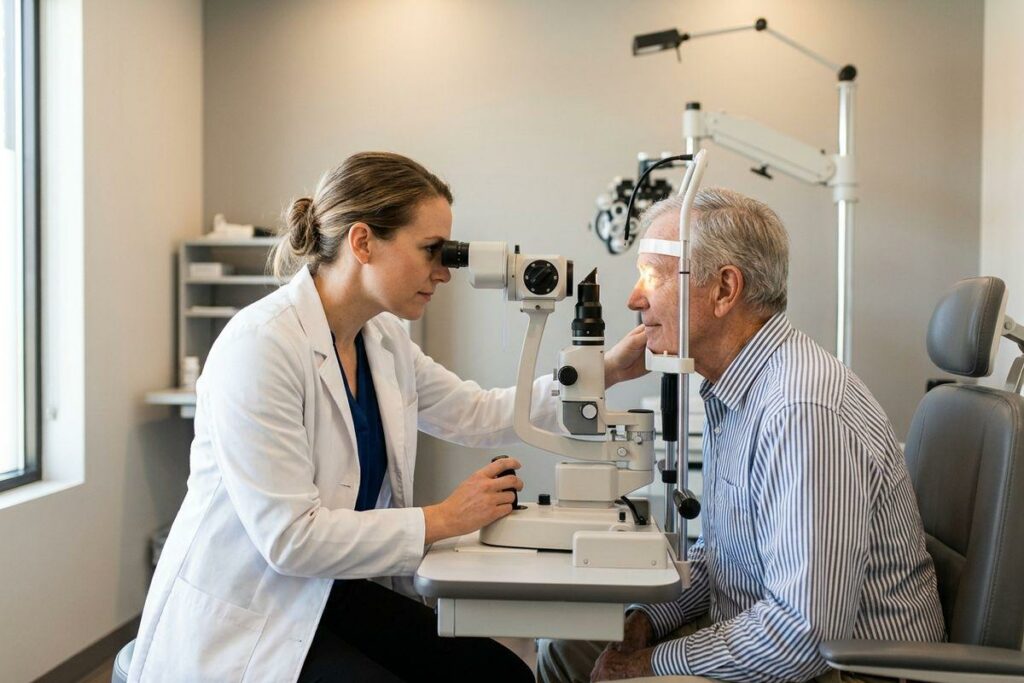
A dilated exam goes further than a vision screening. Here’s the usual sequence:
- Your optometrist puts in dilating drops so your pupils widen and the retina comes into full view.
- Imaging and scans map swelling, leaks, and thinning tissue, and give us a baseline to compare against next year.
- An eye pressure reading screens for glaucoma.
- We review what turned up and, when warranted, coordinate with your diabetes care team.
Plan for a few hours of light sensitivity and blurriness afterward. Bring sunglasses, and arrange a ride if driving into afternoon glare feels uncomfortable.
How to Protect Your Eyes When You Have Diabetes
Keeping blood sugar in your target range puts less stress on those small vessels, week after week. A few habits can support that work:
- Ask your care team which blood sugar range fits your health, then build meals and activity around it
- Keep blood pressure and cholesterol under control to ease strain on eye vessels
- Quit smoking, which narrows small vessels and can speed up retinal damage
- Wear sunglasses that block UV rays whenever you’re outside
Small, steady choices add up over time.
Stay Ahead of Diabetic Eye Changes
Diabetes and your vision are closely linked, and a yearly exam can tell you what’s happening inside your eyes while the changes are still small. Our team at Total Vision Talega examines your retina, tracks differences from year to year, and builds a schedule around your health.
Book your diabetic eye exam and get a clear picture of your eye health.