

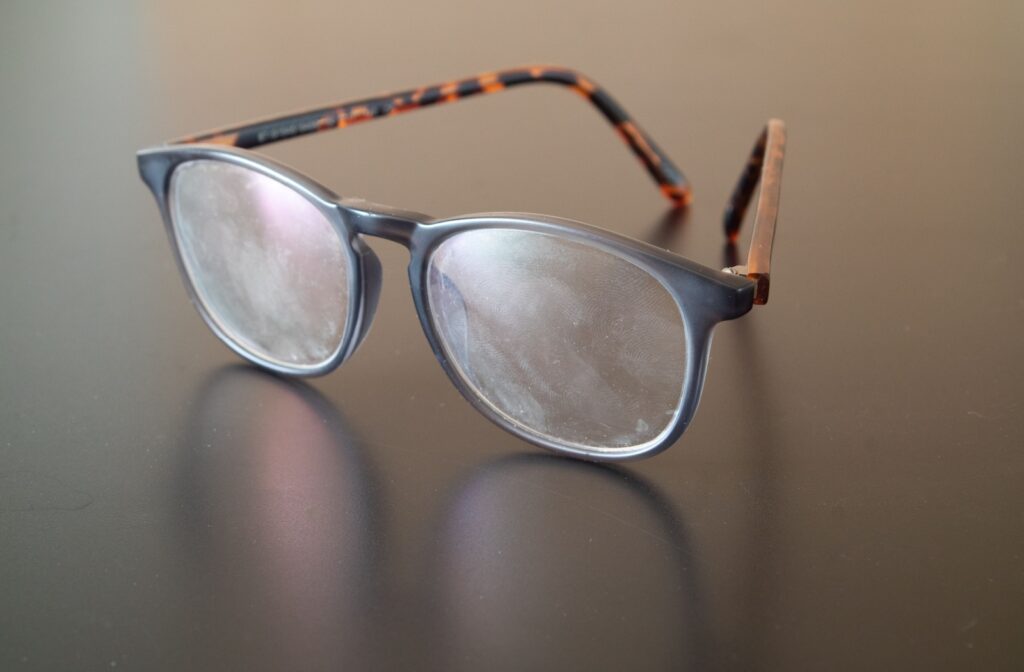
You clean your glasses, and just a few hours later, they’re covered in smudges and spots again. It’s a constant, often frustrating cycle.
If you wonder sometimes why your lenses seem to attract dirt, you’re not alone. A combination of oils from your skin, everyday products, environmental debris, and even your lens coatings all combine to make your glasses a magnet for grime.
Protecting your vision is our practice’s top priority, and that includes helping you maintain your eyewear. By understanding how your glasses smudge, you can learn to minimize some of the common causes of this daily annoyance.
What Makes Your Glasses Grimy & Smudged?
The film that builds up on your lenses comes from a mix of sources you encounter every day. It’s not just one thing—it’s a combination of elements from your body and your surroundings. Let’s look at the main culprits.
Oils from Your Skin & Hair
Your face, hands, and hair produce natural oils. Every time you touch your glasses to adjust them, you transfer those oils onto your frames and lenses. Even your eyelashes can brush against the inside of the lenses, leaving behind small amounts of oil.
Everyday Sprays & Products
Think about the products you use daily, like hairspray, dry shampoo, or perfume. These items create a fine mist in the air that you might not even see. These tiny particles land and settle on your lenses, creating a sticky film that attracts more dust.
Environmental Dust & Debris
The world around you is full of tiny particles floating in the air. These particles can easily stick to the surfaces of your glasses. Common examples include:
- Dust
- Pollen and other allergens
- Air pollution
- Lint from your clothing
How Glasses Get Dirty Without a Touch
Sometimes it feels like your glasses get dirty just by sitting on your face. Even when you’re careful not to touch the lenses, they still end up cloudy. This happens because of airborne factors you can’t always see or control.
Airborne Particles & Pollen
Just like dust settles on a bookshelf, it also settles on your glasses. If you spend time outdoors, pollen and other small particles can land directly on your lenses. Inside your home, dust from vents or fabrics can do the same thing.
Humidity & Condensation
When you move from a cold space to a warm one, your lenses can fog up. This moisture can trap dust and oils that are already on the surface of your lenses. Once the condensation evaporates, it often leaves smudges and spots behind.
Why Some Glasses Are Harder to Keep Clean
You might notice that a new pair of glasses gets smudged more easily than your old pair. Or perhaps some lenses seem impossible to get completely clean. Certain features of your glasses can affect how much dirt they collect and show.
The Role of Lens Coatings
Some lens treatments, like anti-reflective coatings, can make smudges and fingerprints more visible. While these modern lens coatings help your vision by reducing glare, they also highlight any oil or dirt on the surface. It’s a trade-off between clearer vision and more noticeable smudges.
Scratches Trap Dirt
Over time, your lenses can develop tiny, microscopic scratches from normal use and incorrect cleaning. These small grooves create places for dirt, oil, and debris to get trapped. This can make your glasses look permanently dirty, even right after you clean them. If scratches become a problem, it may be worth exploring whether you can get new lenses for your old frames.
The Right Way to Clean Your Eyeglasses
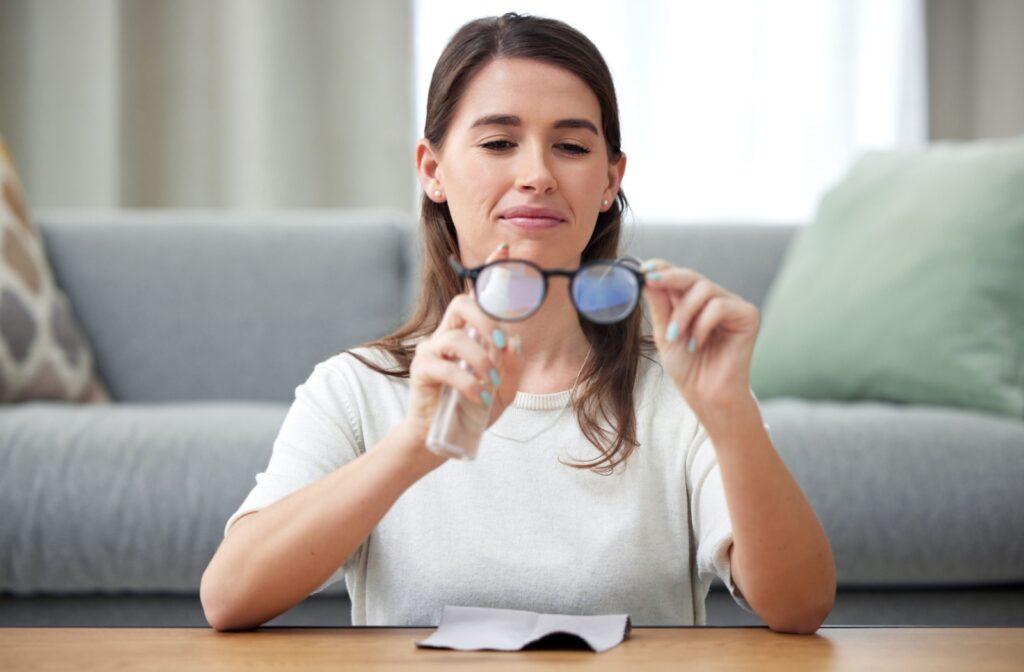
A proper cleaning routine can make a big difference in how long your glasses stay clear. Using the right materials and techniques helps remove grime without causing damage to your lenses.
A Simple Step-by-Step Clean
Follow these steps for a safe and effective clean:
- Rinse your glasses under lukewarm tap water to wash away any loose debris that could scratch the lenses.
- Apply one small drop of lotion-free dish soap to each lens.
- Gently rub both sides of the lenses and the entire frame with your fingers.
- Rinse your glasses thoroughly under running water to remove all the soap.
- Dry everything carefully with a clean, soft microfiber cloth.
Wipes vs. Spray
Both pre-moistened lens wipes and a combination of cleaning spray with a microfiber cloth are good options for cleaning your glasses. The choice often comes down to convenience and personal preference. Wipes are great for on-the-go cleaning, while a spray and cloth can provide a thorough clean at home.
What to Avoid When You Clean
To prevent scratches and damage, never use your shirt, a paper towel, or a napkin to clean your lenses. These materials are too abrasive and can leave behind lint or even cause permanent scratches on the lens surface. Just as there are rules for safe contact lens hygiene, your glasses require care to avoid damage. Avoid cleaners with ammonia or alcohol, as these can damage lens coatings.
Keep Clear Vision With Professional Care
While daily cleaning is important, professional care helps maintain your eyewear and your visual health. Your local eye care team can offer solutions for clearer, cleaner glasses. This support goes beyond what you can do at home.
When to Get a Professional Clean
An optical professional can give your glasses a deep clean using special tools. These tools remove buildup from hard-to-reach spots, like where the lenses meet the frame. They can also check for loose screws or make adjustments for a better, more comfortable fit.
How Regular Eye Exams Help
A routine eye exam does more than check your prescription. It’s also a chance to discuss your lifestyle and any issues you have with your eyewear—including dirty lenses. A clean pair of glasses with an accurate prescription is a key part of preventative eye care.
Ask Your Eye Doctor in San Clemente About Lens Options
If you find your glasses are very difficult to keep clean, talk to your eye doctor. Certain lens materials and coatings may be better at repelling oil and water. These options may help your glasses stay cleaner for a longer period.
At Griffin Optometric Group, we’re here to help you with all aspects of your eye care. If you have questions about your glasses or if it’s time for an exam, contact us! We can help you find solutions for your entire family.